Solar Park Studies: A Complete Guide to Planning Large-Scale Solar Energy Projects
Solar Park Studies:
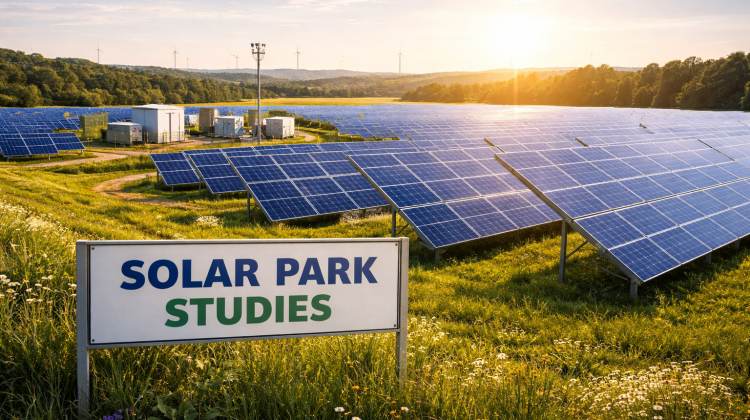
The global transition toward renewable energy has significantly increased the demand for large-scale solar power generation. Solar parks, also known as solar power parks or solar farms, have become a key component of sustainable energy infrastructure. These projects generate electricity using solar photovoltaic (PV) technology and supply clean power to the grid, helping countries reduce dependence on fossil fuels.
However, the development of a solar park requires careful planning, technical evaluation, financial analysis, and environmental consideration. This is where Solar Park Studies play an essential role. Comprehensive studies help determine whether a solar project is technically feasible, economically viable, and environmentally sustainable.
This guide explains the importance of solar park studies and the key factors involved in planning large-scale solar energy projects.
What Are Solar Park Studies?
Solar park studies refer to a detailed evaluation process conducted before the development of a solar power project. These studies analyze various technical, environmental, and financial aspects to ensure that the project is practical and sustainable.
The purpose of these studies is to assess whether a specific location and project design can efficiently generate solar power and deliver long-term benefits. Solar park studies help investors, developers, and government agencies make informed decisions before committing to large-scale investments.
A typical solar park study includes site analysis, solar resource assessment, grid connectivity evaluation, environmental impact studies, and financial feasibility analysis.
Importance of Solar Park Studies
Solar parks involve substantial investment and infrastructure development. Without proper studies, projects may face operational inefficiencies, financial losses, or regulatory challenges.
Conducting comprehensive solar park studies offers several advantages:
Ensuring Project Feasibility
Feasibility studies determine whether a project can be successfully implemented at a specific location. These studies evaluate solar radiation levels, land conditions, infrastructure availability, and regulatory requirements.
Optimizing Energy Production
Solar resource assessment helps estimate how much electricity a solar park can generate annually. Accurate data ensures that the project design maximizes power output.
Minimizing Environmental Impact
Large-scale solar projects must consider environmental factors such as land use, wildlife habitats, and local ecosystems. Environmental studies help developers minimize negative impacts while promoting sustainable development.
Attracting Investors and Financing
Investors and financial institutions require detailed feasibility reports before funding renewable energy projects. Solar park studies provide credible data that supports investment decisions.
Key Components of Solar Park Studies
Solar park planning involves multiple technical and analytical processes. Each component contributes to the overall success of the project.
Site Selection and Land Assessment
The first step in solar park development is identifying a suitable site. Several factors are considered during site assessment:
- Availability of large, open land areas
- Minimal shading from trees, buildings, or mountains
- Accessibility for construction and maintenance
- Proximity to power transmission infrastructure
- Land ownership and regulatory approvals
Flat or gently sloping land is usually preferred because it simplifies panel installation and improves energy generation efficiency.
Solar Resource Assessment
Solar energy production depends heavily on sunlight availability. Solar resource assessment analyzes solar radiation data to estimate the potential energy output of the project.
This analysis includes:
- Solar irradiance levels
- Weather patterns
- Seasonal variations
- Temperature impact on panel performance
Accurate solar resource data helps engineers design the solar park for maximum efficiency.
Technical System Design
The technical design phase involves selecting appropriate technologies and equipment for the solar park.
Key considerations include:
- Solar panel type and efficiency
- Mounting structures and tracking systems
- Inverters and power conversion systems
- Electrical cabling and grid connection infrastructure
Modern solar parks often use advanced technologies such as single-axis trackers that follow the sun’s movement to increase energy production.
Grid Connectivity and Power Transmission
A solar park must be connected to the electrical grid to supply generated power. Grid integration studies analyze whether existing transmission infrastructure can handle the new power capacity.
Important factors include:
- Distance to the nearest grid substation
- Transmission line capacity
- Power stability and reliability
- Grid regulatory approvals
Proper grid planning ensures smooth power distribution and prevents transmission bottlenecks.
Environmental Impact Assessment
Environmental impact assessment (EIA) evaluates how the solar project may affect the surrounding ecosystem.
Key environmental considerations include:
- Land use changes
- Impact on wildlife and biodiversity
- Soil and water conservation
- Visual and landscape impact
Environmental studies ensure that solar park development aligns with sustainability and environmental protection standards.
Financial and Economic Analysis
Solar park projects require significant capital investment. Financial feasibility studies evaluate the economic viability of the project.
This analysis includes:
- Project development costs
- Equipment and installation expenses
- Operation and maintenance costs
- Expected energy revenue
- Payback period and return on investment
A strong financial analysis helps investors understand the long-term profitability of the project.
Regulatory and Policy Considerations
Solar park development must comply with government regulations and renewable energy policies. These regulations may include land acquisition rules, environmental clearances, grid connection permits, and energy tariffs.
In many countries, governments encourage solar park development through incentives such as tax benefits, subsidies, and renewable energy certificates. Understanding these policies is essential for successful project implementation.
Challenges in Solar Park Development
Although solar energy offers numerous benefits, large-scale solar projects may face several challenges.
Some common challenges include:
Land Acquisition Issues
Acquiring large parcels of land can be complex due to legal, environmental, or community concerns.
Grid Infrastructure Limitations
In remote areas, transmission infrastructure may be insufficient to support large-scale solar power generation.
Weather Variability
Solar energy production depends on sunlight availability, which can vary due to weather conditions and seasonal changes.
Financing and Investment Risks
Large-scale solar projects require significant upfront investment, and financial risks must be carefully managed.
Addressing these challenges requires proper planning, advanced technology, and strong regulatory support.
Future of Solar Parks
The future of solar parks looks promising as countries around the world continue to invest in renewable energy infrastructure. Advancements in solar technology, energy storage systems, and smart grid integration are making solar parks more efficient and cost-effective.
Innovations such as floating solar farms, hybrid renewable energy systems, and AI-based energy management are transforming how solar parks operate. These developments will play a crucial role in achieving global sustainability and climate goals.
Conclusion
Solar park studies are a critical foundation for the successful development of large-scale solar energy projects. By conducting comprehensive feasibility assessments, developers can evaluate site suitability, optimize system design, manage environmental impacts, and ensure financial viability.
As the demand for clean energy continues to grow, solar parks will play an increasingly important role in powering communities and supporting sustainable development. Proper planning, technological innovation, and responsible environmental practices will ensure that solar energy remains a reliable and effective solution for the future.