Solar Park Development Guide: Technical, Legal & Financial Insights
Solar Park Development Guide:
Solar parks have emerged as one of the most efficient ways to scale renewable energy infrastructure, especially in a rapidly growing economy like India. With increasing demand for clean power and supportive government policies, solar park development offers a compelling opportunity for investors, developers, and policymakers alike. This guide provides a complete overview of the technical, legal, and financial aspects involved in developing a successful solar park.
1. Understanding Solar Park Development
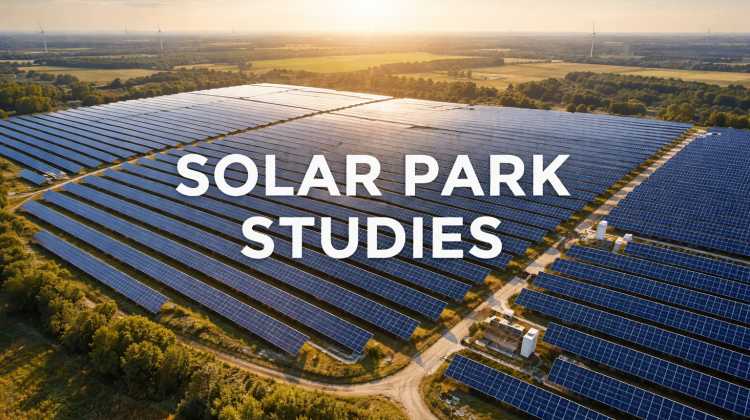
A solar park is a large-scale solar power generation project where multiple developers can set up photovoltaic (PV) plants within a designated area. These parks are usually equipped with shared infrastructure such as transmission lines, roads, and water supply systems, making them cost-efficient and easier to manage.
The Government of India, under schemes like the Solar Park Scheme by the Ministry of New and Renewable Energy, aims to establish ultra-mega solar parks across the country to meet renewable energy targets.
2. Technical Aspects of Solar Park Development
a) Site Selection
Selecting the right site is critical. Key factors include:
- High solar irradiation levels
- Availability of large contiguous land
- Proximity to transmission infrastructure
- Low environmental and social impact
States like Rajasthan and Gujarat are ideal due to high sunlight exposure and vast land availability.
b) Solar Technology
Two main technologies are used:
- Photovoltaic (PV) Systems – Convert sunlight directly into electricity
- Concentrated Solar Power (CSP) – Uses mirrors to focus sunlight
PV systems are more commonly used due to lower costs and easier scalability.
c) Infrastructure Requirements
A solar park requires:
- Internal roads and drainage systems
- Power evacuation infrastructure (substations and transmission lines)
- Water supply for panel cleaning
- Monitoring and control systems
d) Grid Connectivity
Efficient grid connectivity is essential to ensure that generated power is transmitted without losses. Coordination with state transmission utilities is necessary during planning.
3. Legal and Regulatory Framework
a) Land Acquisition
Land acquisition is one of the most complex parts. Developers can either:
- Purchase land directly
- Lease government land
- Partner with state agencies
Compliance with land-use regulations and zoning laws is mandatory.
b) Environmental Clearances
Solar parks must comply with environmental regulations, including:
- Environmental Impact Assessment (EIA)
- Forest clearance (if applicable)
- Wildlife protection norms
c) Licensing and Approvals
Developers must obtain approvals from multiple authorities such as:
- State Electricity Regulatory Commission (SERC)
- Distribution Companies (DISCOMs)
- Grid operators
d) Power Purchase Agreements (PPAs)
A PPA is a long-term contract between the developer and the buyer (usually DISCOMs or private companies). It defines tariffs, duration, and obligations, ensuring revenue stability.
4. Financial Insights and Investment Planning
a) Project Cost
The cost of setting up a solar park depends on capacity, location, and technology. On average:
- ₹3.5–5 crore per MW for utility-scale projects
Major cost components include:
- Solar panels and inverters
- Land and infrastructure
- Installation and commissioning
b) Funding Options
Developers can explore:
- Bank loans and NBFC financing
- Equity investments
- Government subsidies and incentives
Institutions like Indian Renewable Energy Development Agency (IREDA) provide financial support for renewable projects.
c) Government Incentives
The Indian government offers several incentives:
- Viability Gap Funding (VGF)
- Tax benefits under Section 80-IA
- Accelerated depreciation
- Waivers on interstate transmission charges
d) Revenue Model
Revenue is generated through:
- Sale of electricity via PPAs
- Open access power sales
- Renewable Energy Certificates (RECs)
5. Risk Factors and Mitigation
a) Policy Risks
Changes in government policies can impact project viability. Staying updated with regulations is crucial.
b) Land and Legal Risks
Disputes over land ownership or delays in approvals can slow down the project.
c) Technical Risks
Equipment failure or inefficient design can reduce power output. Using high-quality components and experienced EPC contractors helps mitigate this.
d) Financial Risks
Fluctuating interest rates and delayed payments from DISCOMs can affect cash flow. Diversifying buyers and securing strong PPAs is recommended.
6. Benefits of Solar Park Development
- Scalability: Large-scale generation reduces cost per unit
- Sustainability: Supports clean energy goals and reduces carbon footprint
- Employment Generation: Creates jobs in construction, operation, and maintenance
- Energy Security: Reduces dependency on fossil fuels
Solar parks also contribute significantly to achieving renewable energy targets under global agreements like the Paris Climate Accord.
7. Future Outlook
The future of solar park development in India looks promising, driven by:
- Increasing electricity demand
- Falling solar equipment costs
- Strong government support
- Advancements in storage technologies
Emerging trends such as hybrid parks (solar + wind) and battery energy storage systems (BESS) are expected to further enhance efficiency and reliability.
Conclusion
Solar park development is a powerful opportunity for investors and developers looking to enter the renewable energy sector. While the process involves technical complexity, regulatory compliance, and significant investment, the long-term benefits far outweigh the challenges. With the right planning, partnerships, and execution strategy, solar parks can deliver sustainable returns while contributing to a greener future.