Solar Park Development: Expert Study Guide for Investors and Developers
Solar Park Development:
The renewable energy sector in India is expanding rapidly, and solar power is at the forefront of this transformation. Solar parks—large-scale solar power generation facilities—are becoming a key part of the country’s energy infrastructure. For investors and developers, understanding the technical, financial, legal, and environmental aspects of solar park development is crucial for project success in 2026.
1. What is a Solar Park?
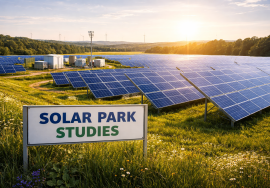
A solar park is a concentrated area developed for large-scale solar power generation. It typically includes multiple solar power projects with shared infrastructure such as transmission lines, roads, and grid connectivity. Solar parks aim to:
- Facilitate efficient land use
- Reduce project development costs
- Provide grid-connected renewable energy at scale
Investors and developers benefit from streamlined operations, economies of scale, and access to government incentives.
2. Importance of Solar Park Development
With India’s commitment to achieving net-zero emissions and increasing renewable energy capacity, solar parks play a vital role. Key benefits include:
- Cost Efficiency: Shared infrastructure reduces capital and operational expenditure
- Grid Stability: Centralized planning ensures stable and efficient energy distribution
- Investment Opportunities: Attracts private and institutional investors
- Environmental Benefits: Reduces reliance on fossil fuels, lowering carbon emissions
- Government Support: Access to incentives, subsidies, and policy frameworks
Well-planned solar parks align with sustainable development goals and make large-scale renewable energy projects feasible.
3. Key Steps in Solar Park Development
Successful solar park development involves a systematic approach covering technical, financial, legal, and environmental considerations:
a) Feasibility Study
A comprehensive feasibility study is essential for project viability. It typically includes:
- Solar Radiation Assessment: Evaluating sunlight availability for optimal energy generation
- Land Assessment: Identifying suitable land with minimal environmental impact and legal clearance
- Grid Connectivity: Ensuring availability of transmission lines and substations
- Financial Viability: Estimating costs, potential revenue, and ROI
b) Technical Design
Designing the solar park involves:
- Selecting solar technology (photovoltaic panels, inverters, trackers)
- Layout planning for maximum sunlight capture
- Designing electrical infrastructure for safe energy transmission
- Integrating energy storage solutions if required
c) Legal and Regulatory Compliance
Solar park development must comply with various regulations:
- Land acquisition laws and environmental clearances
- Renewable Energy Certificates (REC) and grid connection approvals
- Contractual agreements with power off-takers
- Compliance with state and central government policies
d) Financial Planning
Proper financial planning ensures sustainability:
- Project cost estimation including equipment, land, and operational expenses
- Securing funding from banks, private investors, or government programs
- Risk assessment including policy changes, currency fluctuations, and market demand
e) Environmental and Social Impact Assessment
Developers must conduct environmental impact studies to minimize adverse effects:
- Assessing impact on local flora and fauna
- Ensuring water and soil conservation
- Engaging local communities for social acceptance and employment opportunities
4. Government Incentives and Policies
India offers several incentives to encourage solar park development:
- Viability Gap Funding (VGF): Reduces upfront investment burden for developers
- Accelerated Depreciation Benefits: For faster tax savings
- Subsidies for Land and Equipment: Reduces overall project costs
- Renewable Energy Certificates (REC): Tradable certificates for additional revenue
Investors should stay updated with evolving policies to maximize benefits and compliance.
5. Risks and Challenges in Solar Park Development
While solar parks offer significant opportunities, developers must be aware of challenges:
- Land Acquisition Issues: Legal disputes and community resistance
- Grid Integration Challenges: Delays in connectivity or insufficient infrastructure
- Financial Risks: High initial investment and fluctuating market rates
- Regulatory Changes: Shifts in government policies or tariffs
- Environmental Concerns: Local ecosystem disturbances and water usage
Proactive risk management and planning are essential to ensure project success.
6. Best Practices for Investors and Developers
To maximize success in solar park projects:
- Conduct detailed feasibility and technical studies before investment
- Engage experienced consultants for legal, financial, and environmental compliance
- Use modern technology like AI-based monitoring, smart trackers, and efficient inverters
- Plan for community engagement and corporate social responsibility initiatives
- Diversify investment across multiple projects to reduce risk
- Continuously monitor energy generation and maintenance for operational efficiency
Implementing best practices ensures long-term sustainability and profitability of solar park projects.
Conclusion
Solar park development is a lucrative and impactful investment opportunity in India’s renewable energy sector. By understanding technical design, financial planning, legal compliance, and environmental considerations, investors and developers can create efficient, sustainable, and profitable projects. In 2026, leveraging expert insights and best practices will ensure that solar parks contribute effectively to India’s energy goals while providing long-term returns for stakeholders.